CENTRAL AMERICAN LENS is our photo of the week in the El Faro English newsletter. Subscribe here.
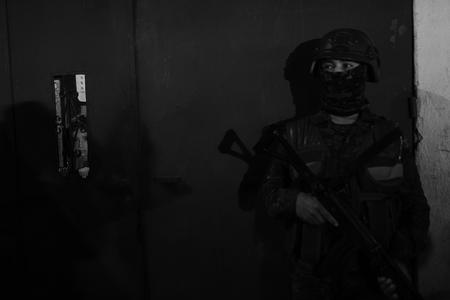
Soldiers patrol the neighborhoods most stigmatized and neglected by governments, stopping young people for routine searches that could end in arrest.
This photograph is not from El Salvador —though it easily could be— nor Honduras, whose Military Police have spread fear in marginal neighborhoods for over a decade.
It was taken during a police-and-military operation in El Gallito, one of Guatemala City’s most fraught neighborhoods, under a state of siege.
Arévalo Begins Third Year under State of Siege amid Clashes with 18th Street
On January 22, a little girl peeked out at a group of masked soldiers standing guard outside her house, days after President Bernardo Arévalo declared the month-long state of siege.
A series of gang riots inside prisons —followed by the murder of 11 police officers in targeted attacks— led to a large deployment of security forces in neighborhoods like hers.
Over the weekend, Arévalo announced that the state of siege will be reduced to a state of prevention on Tuesday the 17th. The measures will last 15 days and won’t need approval from Congress. But the joint patrols will continue.
Children in northern Central America grow up in the shadow of the military and their guns. As reporting by organizations like Cristosal shows, militarization goes hand-in-hand with abuses.
The soldiers don’t end violence; the perpetrators simply change faces and put on uniforms.