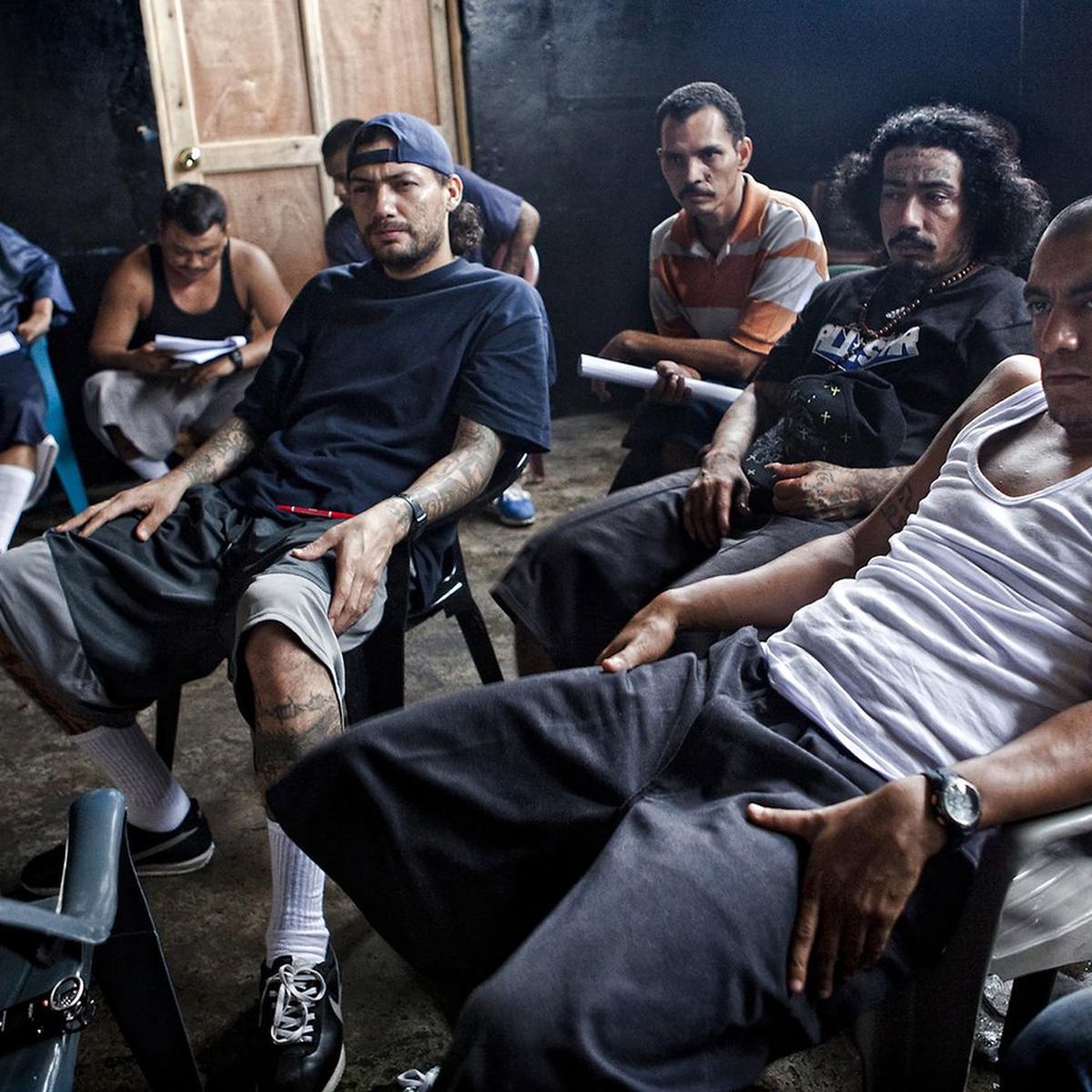
| More information: | - In 1992, Sirra joined the gang at the age of 14 in the San Rafael neighborhood of Santa Tecla, where he was given that nickname because of his speed, according to an interview he granted to the author on December 12, 2012, at the Ciudad Barrios prison.
- On August 9, 1995, he participated in the murder of Roberto Gallardo Argüello, father of then-Minister of Education Cecilia Gallardo de Cano. The 69-year-old man was killed while exercising in the Utila neighborhood, according to a 1995 report by the EFE news agency.
- Sirra received protection under the Juvenile Offenders Act and was sentenced to seven years in prison, of which he served four for good behavior.
- On May 25, 1999, he was back on the streets, and together with his gang mates, Carlos Ramos Mancía, Flaco, and William Eduardo Villalta, Peluca, they kidnapped engineering student Eduardo Ernesto Álvarez Villacorta while he was jogging on Santa Elena Boulevard. They demanded a ransom of one million colones ($114,285) from the family. The father negotiated and handed over 270,000 colones ($31,000) near Camelot Square in exchange for Ernesto. However, the kidnappers took him to kilometer 39 of the road to Quezaltepeque, where Sirra shot him in the head with a shotgun. “See how easy it is?” he said after killing him, according to a criminal case. The authorities referred to the kidnappers as the Cartelito de Ciudad Merliot.
- On August 30, 1999, he was captured at a Texaco gas station while attempting to rob it, according to a case heard by the Nueva San Salvador Sentencing Court in February 2001.
- In July 2009, he was transferred from the Zacatecoluca prison to the San Francisco Gotera prison. However, less than two months later, Sirra was accused of ordering the kidnapping and execution of Rosa Ana Margarita Bolaños de Cardona from his cell in Gotera, according to the testimony to prosecutors of former director of prisons Douglas Moreno.
- On September 23, 2009, he returned to Zacatecoluca prison, according to Diario El Mundo.
- On March 8, 2012, he was transferred from the maximum-security prison in Zacatecoluca to Ciudad Barrios on the orders of the Minister of Security and Justice, David Munguía Payés, to implement the so-called Truce, according to investigations by El Faro.
- During The Truce, he served as the official spokesperson for MS-13 to the media and civil society, giving press conferences and interviews to national and international media outlets.
- In 2013, the benefits of The Truce allowed him to baptize his son inside the Ciudad Barrios prison in March 2013, according to El Diario de Hoy.
- On May 29, 2013, he was taken from the Ciudad Barrios prison and driven to the Tabernáculo Bíblico Bautista “Amigos de Israel” (Friends of Israel Baptist Tabernacle) for a live televised interview with one of the leaders of Barrio 18, Carlos Mojica Lechuga, alias “Viejo Lin,” to talk about The Truce and give his life testimony. This outing represented the last media event of The Truce.
- In 2014, Sirra issued orders to “attack police personnel outside of working hours, considering them vulnerable, since most do not carry weapons, which minimizes the risk of gang members being killed,” according to a police intelligence report conducted in October 2014.
- On February 19, 2015, after the breakdown of The Truce, he was returned to the maximum-security prison in Zacatecoluca, along with three MS-13 leaders. Upon arrival, he was sent, along with Borromeo Enrique Henríquez Solorzano, alias Diablito, to a severe isolation regime, as reported by El Faro.
- Between 2015 and 2016, he filed a complaint against the Republic of El Salvador with the Inter-American Commission on Human Rights, accusing the country of “seriously violating the rights of prisoners,” according to the document. In that complaint, he claimed that he was suffering from the suspension of medical examinations by the prison system. According to a memorandum written by former PNC director Mauricio Ramírez Landaverde and sent to Foreign Minister Hugo Roger Martínez Bonilla, Sirra's partner, attorney Mercedes Cisneros Cea, was helping him file the complaint.
- Cisneros Cea was allegedly in charge of investing money extorted by Sirra in businesses he had in conjunction with members of the 18th Street Revolucionarios gang, according to a key witness known as Dragón, as reported by the Anti-Gang Unit.
- Between May and June 2016, he was part of the first line of gang command at the Zacatecoluca prison until he was removed from his position due to “cardiovascular problems and other ailments,” as stated in the criminal case known as Operation Cuscatlán.
- On February 14, 2018, Sirra told a police intelligence agent of his decision to leave the gang because “new rules were being created with which he did not agree.” In that interview with the Police Intelligence Subdirectorate, he was asked, “What has the gang said or what do they think of the [extraordinary] measures?” Sirra replied, “There are three negotiating tables with the gangs: one with ARENA, another with the FMLN, and another with Nayib Bukele.” He then added: “Nayib has not asked them for votes either. What he wants is to maintain dialogue and create reintegration programs with the gangs, supported by the international community and with the funds currently used for public security.”
- Several PNC reports confirm that Sirra was providing information about the gang to the Salvadoran authorities.
- On May 20, 2019, the Inter-American Court of Human Rights dismissed his complaint, finding no grounds for applying precautionary measures.
- In December 2019, he was sentenced to 14 years for unlawful association, in accordance with the ruling in the Operation Cuscatlán case.
- In 2020, his prison record listed him as “EX MARA SALVATRUCHA.”
- According to a former MS-13 member who was imprisoned in Zacatecoluca until 2021, whom the author of this investigation interviewed, Sirra became a Christian and was housed in sector 2 of the Zacatecoluca prison, which is designated for retired gang members and civilians.
- On April 28, 2022, prosecutor Rodolfo Delgado posted on Twitter that during the hearing for his extradition, the former gang member requested that his extradition to a U.S. prison be expedited. But that never happened.
|