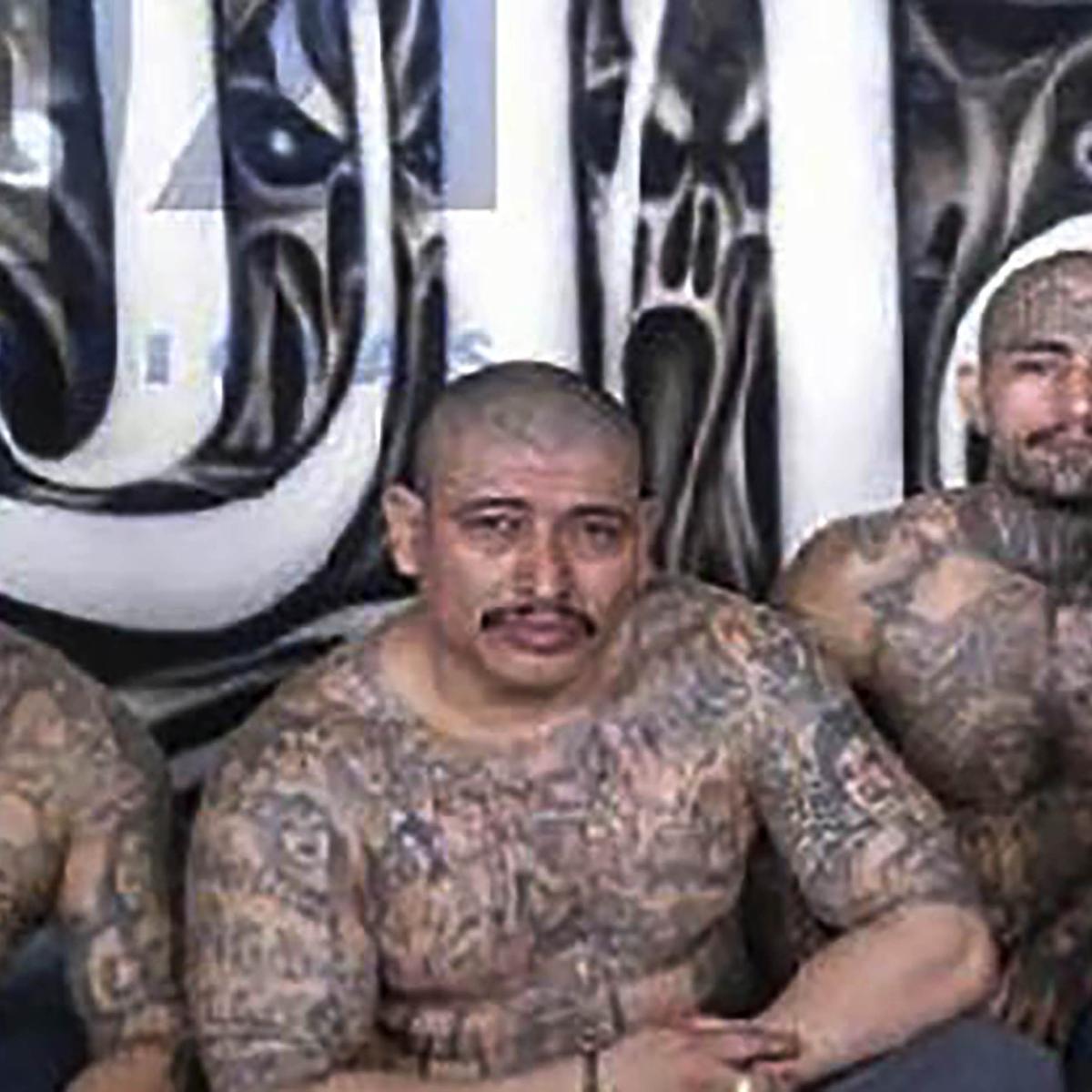
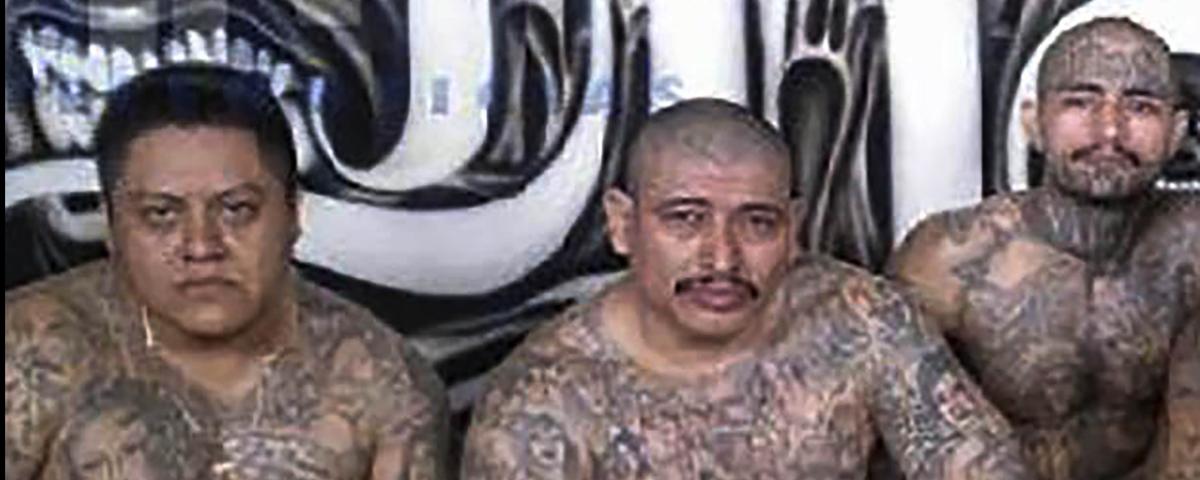
| More information: | - In the 1980s, his parents came to live in the Diez de Octubre neighborhood of San Marcos during the Civil War, according to journalist Roberto Valencia.
- In the early 1990s, Borromeo Enrique Henríquez Solórzano, alias Diablito, initiated him into the San Sívar Locos clique, the first local clique in all of El Salvador, under the alias “Gonzo,” as confirmed by two former members of that clique.
- He reached eighth grade, according to his pre-trial report in the United States.
- He had two brothers who were murdered in El Salvador, according to records from Crook's own appearance in a Texas court on November 13, 2024, after his capture in Mexico and transfer to the United States.
- In 1999, he fled to Los Angeles, guided by Diablito, where he joined the Hollywood Locos gang for the second time, residing there for only one month, according to his initial appearance. From there, he moved to the state of Maryland, where his mother lived, for six months.
- On December 24, 1999, he was deported from the United States, according to a report by the National Civil Police of El Salvador.
- On June 11, 2000, together with former police officers and gang members, he simulated a roadblock and kidnapped Rafael César Sandoval as he was leaving Costa Azul beach in Sonsonate, according to criminal case No. 115-2001-1.
- On June 12, 2000, the day after the kidnapping, he was arrested while collecting the ransom money, as reported by La Prensa Gráfica in a news article that day.
- His sister, Sandra Maritza Canales Rivera, was the one who “gave him all the business,” according to the former gang member nicknamed ‘Maniaco’ from the Gangsters Lil Cychos clique. That woman was arrested in 1994 for “police misconduct,” which are infractions within the corporation, as stated in an intelligence profile prepared by the PNC.
- In 2001, a year later, while imprisoned in the San Francisco Gotera prison and in his twenties, “he maintained close ties with the main authorities of the prison, who agreed to any request,” according to an intelligence profile prepared by the PNC.
- In 2001, he was accused of being an accomplice in the murder of the famous kidnapper Eduardo Enrique Corpeño, alias “Gigio,” according to case No. 1201-12-2003 of the San Francisco Gotera Sentencing Court.
- In 2002, he was imprisoned in the Apanteos prison and, together with Diablito and others, created La Ranfla, which regulated the lives of all gang members in that prison. Over time, that structure would transcend those walls and become the Ranfla Nacional, which controlled all activity of MS-13, the largest criminal organization in El Salvador in the last two decades.
- He was transferred to Ciudad Barrios in 2008, where he remained until June 12, 2010, according to criminal case 2020-A-2014.
- In 2006, while in prison, he received money on Thursdays and Fridays from extortion of minibus drivers in San Salvador, according to a PNC intelligence profile obtained by Guacamaya Leaks.
- In 2010, he was transferred to the maximum-security prison in Zacatecoluca, according to El Salvador court documents.
- On July 14, 2010, he orchestrated a kidnapping from the Zacatecoluca prison against a man whom the FGR names as Esteban, who was murdered by a member of his program, according to criminal case C/B-78-13(1).
- Between July and August 2010, agents from the Elite Division Against Organized Crime (DECO) visited him in Zacatecoluca to ask him to become a protected witness, but he refused, according to his statement in the 2017 ruling that accused him of illicit association.
- On September 7 and 8, 2010, together with Borromeo Enrique Henríquez Solórzano, Diablito, they were responsible for a nationwide transport strike, in collusion with the leaders of Barrio 18, according to the indictment in the Cuscatlán Case. The gangs threatened to kill transport workers if they did not comply with the order to paralyze all bus routes. The strike forced the government to deploy military trucks to transport the population.
- On March 8, 2012, he was released from the maximum-security prison in Zacatecoluca and transferred to the prison in Ciudad Barrios, as part of the agreements with the government of Mauricio Funes, within the framework of the process known as La Tregua, according to investigations by El Faro.
- As part of La Tregua, he received a portable DVD player, movies, and a Sony recorder from the government, according to the Salvadoran Attorney General's Office.
- He was the coordinator of the San Marcos Program, which includes several cliques: Diabólicos Mafiosos, Octubre Little Saycos, Alpes Locos, Bella Vista, San Marcos Locos, Veinticinco de Abriles Locos, according to police and prosecutorial information from El Salvador.
- During the 2012 Truce, he played one of the most important roles: being one of the liaisons with the leaders of the two factions of Barrio 18 and punishing the MS-13 members who did not comply with the agreements, according to the Jaque Case.
- On February 19, 2015, Crook was returned to Zacatecoluca after FMLN President Salvador Sánchez Cerén decreed the end of the Truce created by the previous administration, in which he was vice president.
- He is accused of ordering an attack on the 911 Emergency System in retaliation for his return to maximum security, according to a file compiled by Police Intelligence in October 2021.
- He is also accused of ordering the murder, after his return to maximum security prison, of prison guard Jorge Alberto Villalta, whose head was found on April 8, 2015, near the Zacatecoluca cemetery, as stated in a report by the Police Intelligence Center.
- U.S. authorities accuse him of giving orders to increase violence in the United States after the end of La Tregua, as he believed that the United States had influenced that decision. They also accuse him of promoting the expansion of the Mexico Program, which seeks to establish a secure base outside El Salvador and maintain contact with Mexican cartels, according to the initial U.S. indictment.
- By 2017, Óscar Noé Valle Robles, alias Verdugo, was in charge of managing his money, which, among other things, was used for the maintenance and security of his daughters, according to a file compiled by police intelligence.
- Crook was also treasurer of the Hollywood Locos clique and was in charge of buying and selling vehicles, according to the same intelligence file.
- He had bus businesses in San Marcos, in the Diez de Octubre and Montelimar neighborhoods, among others. “The guy had minibuses on Route 11 in San Marcos and even owned a pharmacy,” says a former gang member who is currently in hiding in El Salvador.
- In July 2017, Crook and Diablito were accused by a former colleague of owning a used car dealership valued at $300,000, according to an interview conducted by the Salvadoran Police Intelligence Subdirectorate. Smiley was murdered in Mexico City in 2017.
- From January 12 to 19, 2018, Crook was released from Zacatecoluca Prison for seven days, on the orders of the Attorney General's Office and under the guard of PNC officers. Attorney General Douglas Meléndez said it was an “international investigation.”
- In October 2019, the key witness “Noé” testified that Crook was assisted by PNC investigators in leaving Zacatecoluca prison during fake hearings, and said that he informed on his fellow members of the Fulton Locos gang.
- On January 30, 2020, Crook and Diablito had a treasurer in Mexico who received $1,000 “sent by each gang program” to manage, according to a Salvadoran police gang analysis at the time.
- On February 6, 2020, the Specialized Court of Sentence A of San Salvador handed down a 60-year prison sentence for homicide and illegal associations as a result of Operation Cuscatlán. Crook would later appeal to reduce his sentence to 40 years.
- Between August 7 and September 3, 2020, Crook was relocated to another cell within the Zacatecoluca prison on the orders of the director of prisons, Osiris Luna, according to prison records.
- On February 4, 2021, the Interpol office in Washington issued a red notice titled “Fugitive wanted for prosecution.”
- In the Diez de Octubre neighborhood, Segunda Etapa, there was a guesthouse known as “Don Cruz's neighborhood,” which MS-13 used to “sleep and bring women,” and which was owned by Crook, according to a police intelligence report issued in October 2021.
- On November 18, 2021, while the pact between the gangs and the Bukele government was still in force, and following a sudden increase in homicides between November 9 and 11, Crook was released from Zacatecoluca prison despite having a pending 40-year sentence. After his release, he was housed in an apartment in the Escalón neighborhood of San Salvador, one of the most luxurious neighborhoods in the country, and in “other locations,” as reported in investigations by El Faro and in the indictment by the U.S. Department of Justice. U.S. prosecutors also allege that, upon Crook's release from prison, the Salvadoran government “provided him with a firearm.”
- After his release, Carlos Marroquín, director of Social Fabric and chief negotiator with the gangs on behalf of the Bukele government, personally drove him in a van to Guatemala, as Marroquín himself acknowledged in audio recordings published by this newspaper.
- In Mexico, he was received by members of the Mexico Program, according to a former gang member based in the United States who spoke with El Faro.
- The U.S. Justice Department accused the Mexico Program of MS-13 of giving Canales refuge. Crook remained in Chiapas, near Tapachula, according to an old gang member from the Hollywood Locos who currently lives in Mexico.
- The Bukele administration tried to secretly and illegally recapture Canales by seeking contacts in the criminal world, among them an 18th Street Sureños gang member who claimed to top organized crime police inspector Reyes Escuintla that he had contacts in the Jalisco New Generation Cartel. The head of that police office, which is known by the acronym DECO, agreed to deliver $1.2 million dollars to the criminals in exchange for capturing Crook in Mexico and secretly delivering him to the Salvadoran authorities. But the 18th Street gang member lied to the Salvadoran police and gave El Faro access to audio recordings of his negotiations with the police chief.
- On November 8, 2023, two years after his illegal release from prison in El Salvador Crook was arrested in Mexico and transferred two days later to Houston, Texas, according to the Department of Justice.
- Per a source from MS-13, he was captured in Mazatán, Chiapas.
|