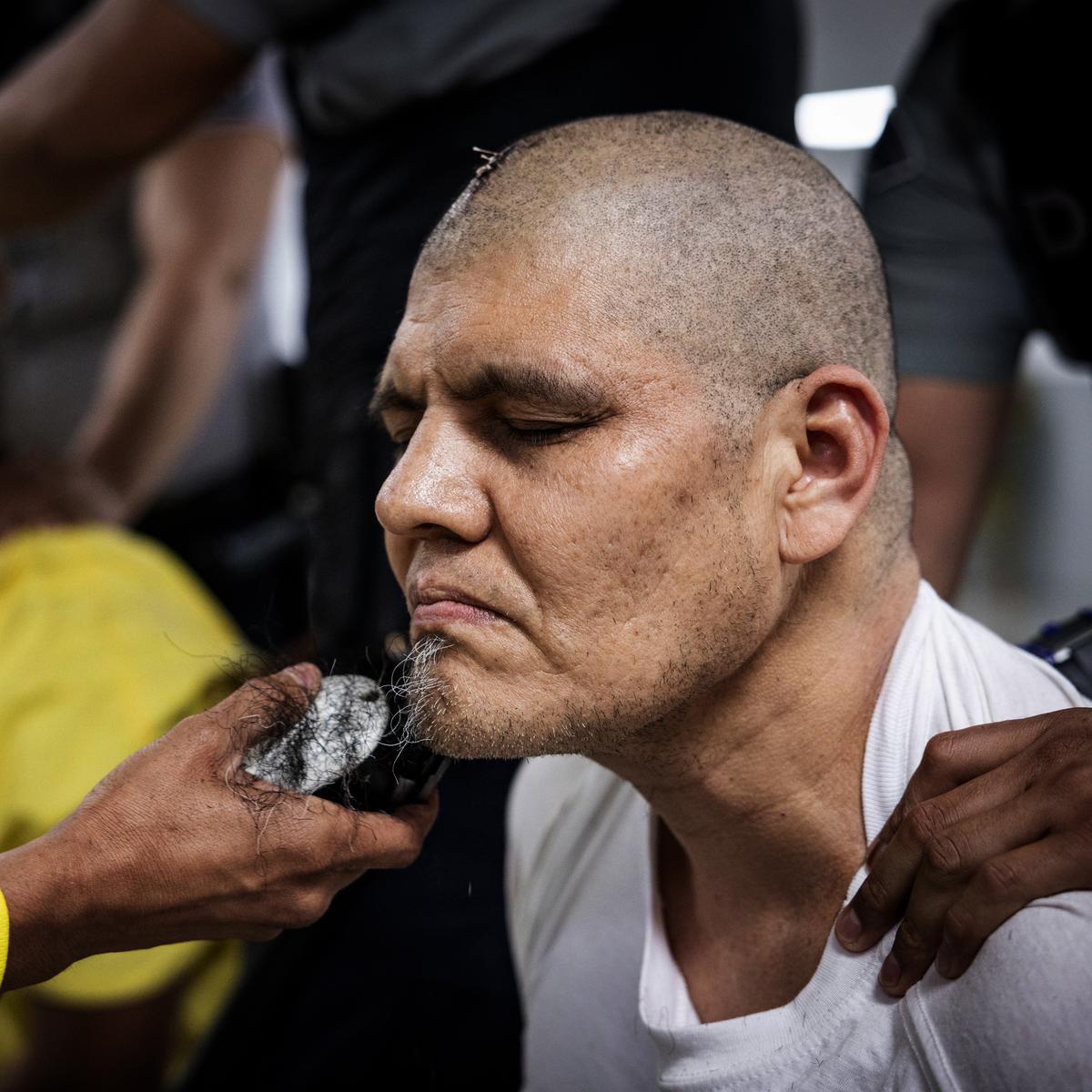
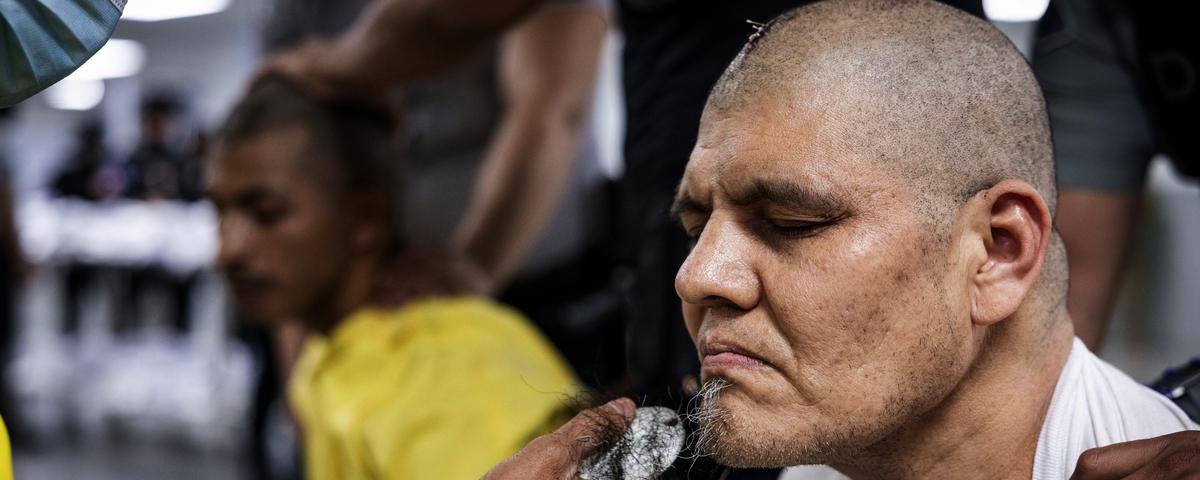
| More information: | - He arrived in the United States in the late 1990s, already an active member of the gang. He was deported from Los Angeles on June 10, 1999, for not having documents, according to a profile compiled by the Salvadoran police.
- He founded the Stoners Locos clique in Santa Ana, as noted in several Salvadoran court documents.
- In 2000, he was arrested for manslaughter, according to a profile compiled by the National Civil Police (PNC) and obtained by the activist group Guacamaya Leaks.
- In 2002, he was imprisoned in the Apanteos prison, where he and a handful of other gang members came up with the idea of refining the gang's hierarchical structure by creating programs that consist of grouping several cliques under the same leadership, according to a document from the Transnational Anti-Gang Center.
- In 2004, he was transferred along with several other well-known gang members to the Quezaltepeque prison, where he formed the first gang leadership that the New York Court calls the Twelve Apostles of the Devil.
- In 2005, he was transferred to the Chalatenango prison, according to a police intelligence profile prepared in July 2017.
- In November 2009, from prison, Greñas invested $1,500 in a cell phone and accessories business located on Avenida Sur in Santa Ana, a business that provided him with regular profits that were collected by members of his clique, according to police information on Largo, a former member of the Stoners Locos Salvatrucha clique and close associate of Greñas, who became a protected witness under the code name “Bons.” Over the years, Greñas invested in more businesses, threatening to take over a cafeteria, a taco restaurant, an auto repair shop, a bakery, a mobile disco, a furniture store, and another cell phone store. He also bought two vehicles to use as pirate taxis, according to Bons' testimony with reference number 01-CEI-15-1.
- “Largo” or “Bons” also accused him of ordering and endorsing at least 10 homicides, according to the same document.
- In 2011, he was transferred to the Zacatecoluca Maximum Security Prison, from where he was released on July 16 of that same year, after 11 years of imprisonment, and went to live in the Nazareno neighborhood in Santa Ana, according to an intelligence profile compiled in July 2017.
- Upon his release from prison, he held a meeting with 12 leaders of his clique to restructure the clique's finances and recover territories. At that meeting, he asked "that an inventory be made in each sector of each member of the clique: checks and collaborators, that each Homeboy in the clique should contribute the amount of twenty-five dollars every two weeks, checks ten dollars and collaborators five dollars, so that the clique's money and drug sales would increase. Another point Greñas addressed was that clique members should look for trustworthy people from each sector to invest the clique's money and thus make a profit,“ according to ”Bons" in his statement on August 10, 2016.
- On January 30, 2013, he was arrested inside a house in Nueva Concepción, Chalatenango, for “imperfect or attempted extortion” and “illicit associations,” but was released a few weeks later, according to a green notice from Interpol (a notice of lesser urgency than a red notice) issued at the request of El Salvador.
- “Bons” claimed that Greñas' clique had a close relationship with lawyers known as Jorge Ernesto Carranza Quintanilla and “Tenguereche,” who lent the gang a house “so they could hide on many occasions when they were being sought by the police to capture them, to hide stolen vehicles, to take women to drink alcohol, take drugs, and have sex, to hide weapons, and to make small packets of drugs to sell.” According to the witness, Carranza also used to lend them a truck “to post” and Tenguereche “helps by going to leave money for Greñas' wife, who lives in Chalatenango. The witness says that the amount of money he takes is five thousand dollars a month, an activity he has carried out monthly since Greñas left for the United States.”
- In November 2013, Greñas was already free and fled to the United States, according to the testimony of “Bons.” “When Greñas left for the United States, he left instructions for the clique that they would be sending him money to the United States of America, the proceeds of investments made in businesses, extortion, and drug sales, that the remittances would be made every two weeks or monthly, with amounts sent of up to ten thousand dollars,” according to the witness.
- In August 2015, Rony Meléndez, alias Little Piwi, sent him $50,000 to Los Angeles to invest in a nightclub in Houston, according to the testimony of “Bons.”
- The contact for the Stoners Locos gang in Mexico was Hugo Armando Quinteros Mineros, alias Flaco de Francis Locos, again according to the testimony of the cooperating witness.
- In February 2016, it is known from wiretapped calls from Operation Jaque that Greñas was in Mexico coordinating with Cruger and Veterano the purchase of marijuana to send to El Salvador.
- On June 27, 2016, “Bons” testified before the Anti-Gang Investigation Division that Greñas was involved in at least ten homicides and gave details about the following:
- In 2010, a motorcyclist from Boca Deli
- In 2011, a man known as “Payaso” and his wife
- In 2011-2012, gang member “Soplón”
- In 2011-2012, his partner Fanto from the Stoners Locos
- In 2013, his homeboys Diablito from Alaska Criminales
- In 2013, a young girl of about 15 from the Diez de Mayo neighborhood
- In 2013, the sister of his partner Irvin Amadeo Clavel López Mafia
- In 2014, a minibus driver who made trips to prisons
- In 2015, a rival gang member from the Barrio 18 gang, alias Anemia
- In 2016, Ernesto Barriento, alias Killer
- On June 29, 2016, Interpol issued a green notice, control number C-452/6-2016, against him to warn that Greñas could pose a threat to public safety in a member country. But he was not wanted for arrest by Interpol at that time.
- In 2016, he was in California. From North Hollywood, Los Angeles, he ordered and coordinated extortions against people in El Salvador. He lived on that money for about a year, receiving around $5,000 a month, according to Salvadoran tax authorities. His partner, who lived in Nueva Concepción Chalatenango, was the one who received the money.
- In 2016, he sent $30,000 from the United States to a coyote (human trafficker) in El Salvador to bring his wife, son, and cousin Manuel Larios to the United States, along with two bodyguards who were protecting them, according to El Salvador's police file with information obtained in June of that same year.
- Also in 2016, he bribed Salvadoran law enforcement officers, according to his Interpol red notice, issued at the request of the United States on January 11, 2021.
- On January 22, 2017, Greñas and Ronald Israel Arauz Rodríguez, alias Hit de Stoners Locos Salvatruchas, planned the murder of the witness “Bons” in a phone call between the United States and El Salvador. In a telephone record with case number 01-CEI-15-1, it was revealed that some police officers were going to charge them $20,000 to inform them of the time “they were taking (Bons) out for proceedings, the vehicle in which they were transporting him, and how many guards there were.” Greñas told Hit that “it would be better to do the job completely and give them twenty-five thousand dollars (to the police officers) to cause the death of that person, which they agreed to, and that they would kill him by poisoning, that they had already bought the poison and brought it to the place where this person was being held in order to carry out the killing.”
- He is accused of being a co-conspirator in the murder of the witness “Bons,” according to a report by the Salvadoran Police Investigations Subdirectorate dated August 8, 2017.
- On July 14, 2017, Greñas was arrested in California as part of Operation Tecana. His arrest was made possible thanks to the cooperation of HSI (Homeland Security) with the Salvadoran Attorney General's Office in tracking his phone numbers, according to the report.
- On July 26, 2017, he was deported by U.S. authorities to El Salvador on a federal charter flight from ICE's Office of Detention and Deportation, according to a police report from El Salvador.
- Howard Cotto, former police director of El Salvador from 2014 to 2019, told the press that Greñas had to assume that he would “lose all hope of ever being released.”
- On November 2, 2018, his partner Noemy Villanueva Santos was wanted by Interpol at the request of El Salvador, according to the Red Notice against her. She was accused of receiving $3,000 a month from members of the Stoners gang.
- In 2019, Greñas was prosecuted in the Specialized Sentencing Court of Santa Ana under Operation Tecana for 12 crimes carrying a total sentence of 143 years in prison: seven counts of conspiracy to commit aggravated homicide; two aggravated homicides; one money laundering offense; one terrorist organization offense; and one bribery offense, according to his Prison Information System file.
- On January 27, 2020, with the arrival of Bukele, Greñas benefited from hospital visits on at least three occasions, according to reports from the San Carlos Command Armed Forces at that prison. The first occurred on January 27, 2020, when he was admitted to the Santa Teresa Hospital in Zacatecoluca for three days. Then, on October 13 and 20, 2020, he was taken to the same hospital, but without being admitted.
- On October 27, 2020, he was released because the Specialized Criminal Chamber of Santa Tecla terminated his provisional detention for all crimes related to Operation Tecana. This was because he had served the legal period of imprisonment without conviction.
|