Since the beginning of his administration in 2024, Guatemalan President Bernardo Arévalo has become a close ally of the United States, despite the ideological divide between a conservative president like Donald Trump and one who describes himself as a social democrat. They have negotiated economic, immigration, and military agreements. Drug trafficking is one of the United States’ primary concerns, which is why it has pushed the Central American region to combat it from within its own territories. In the case of Guatemala, this involves the presence of U.S. armed forces for infrastructure and border security projects.
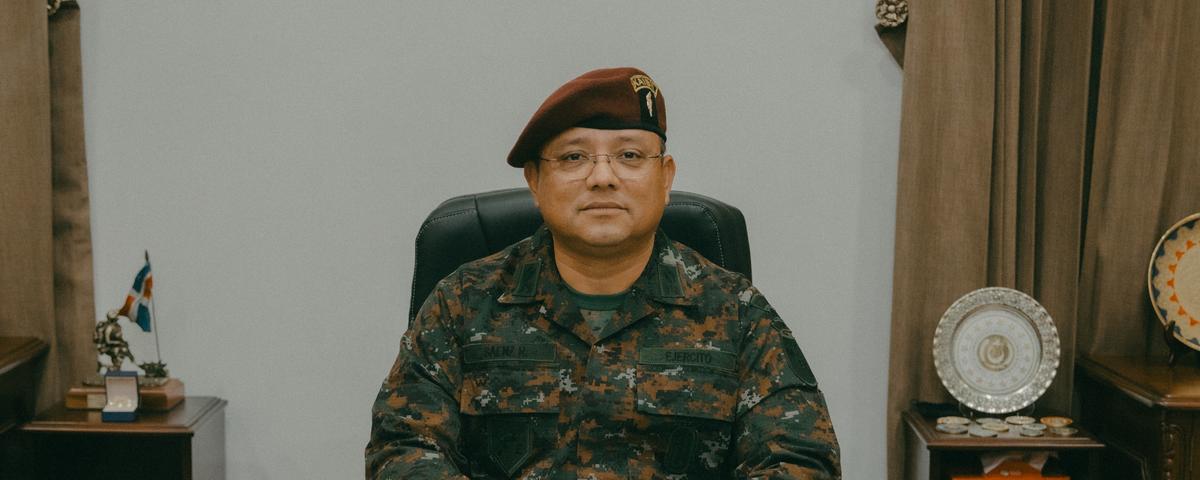
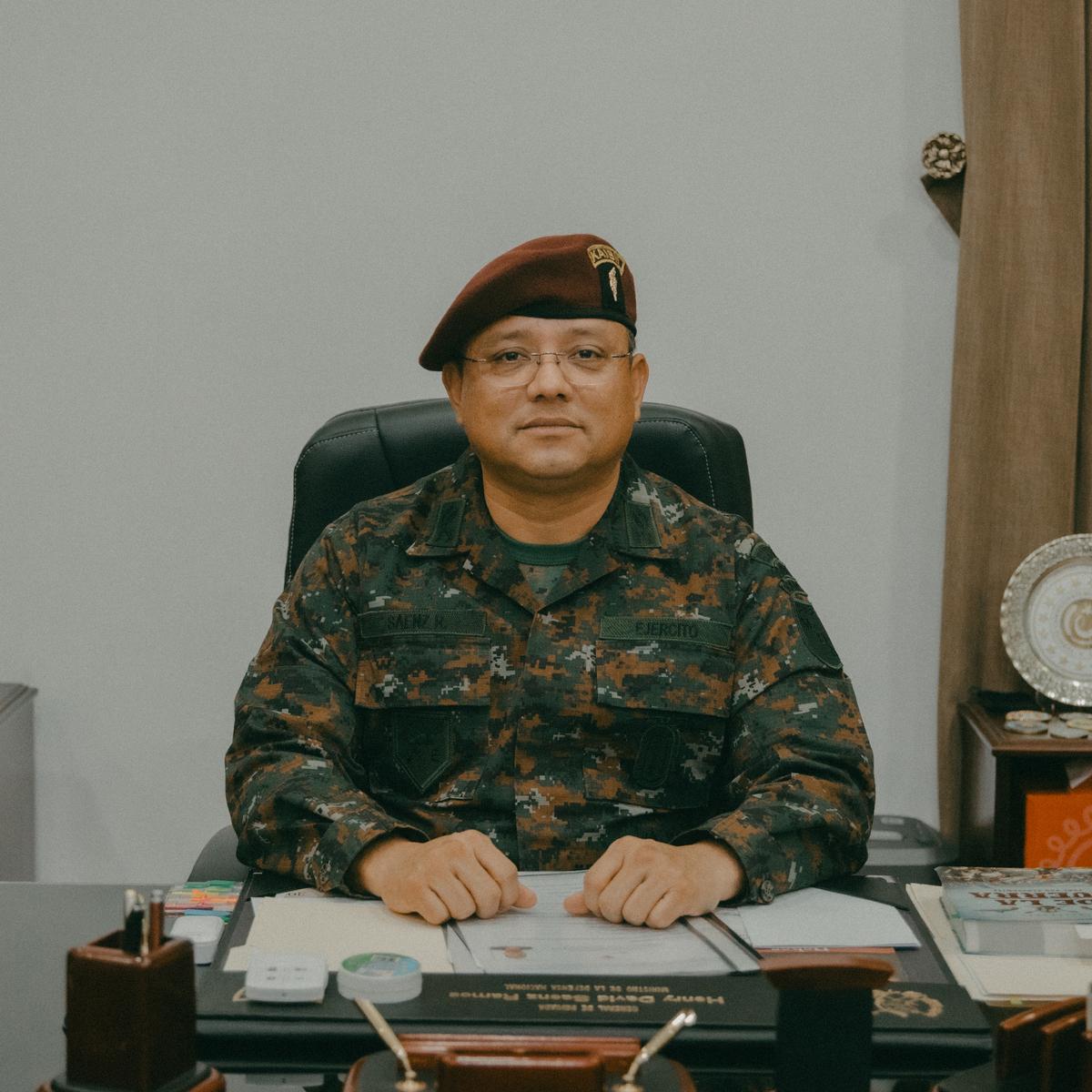
In late May, the New York Times and El País published reports about an agreement between the two countries to carry out joint attacks against drug trafficking organizations, sparking controversy when the president denied any such pact existed. Amid the controversy, Guatemala’s Minister of National Defense, Henry Sáenz, denied that there are plans for joint attacks in this interview with El Faro English. But he did highlight the role the U.S. Army Corps of Engineers will play in major infrastructure projects and assured that a purge of the Army is underway to eliminate “informants” linked to drug trafficking.
The minister, trained as a Kaibil with an extensive military career, avoids commenting on U.S. bombings in the Caribbean, saying they are “outside national territory.” But he does have something to say about the prison policy of Trump’s closest Central American ally, President Nayib Bukele. He attempts to sell Guatemala’s plans to build its own megaprison as consistent with respect for human rights. “We are not going to build a concentration camp,” he said. “We are going to build a prison following the Mandela Rules.”
While Minister Sáenz assures that cooperation with the United States in the fight against drug trafficking is limited to training, he also hints at what the U.S. seeks to gain from this alliance. “We could be a mirror of a future crisis for the Panama Canal — that there is something certain here in Guatemala,” the minister explained. “Guatemala could be a very viable dry canal.”
This year marks the 30th anniversary of the Peace Accords in Guatemala. Before, the Army was fighting in the internal armed conflict. What does it do today?
Yesterday [June 8], the National Coordinator for Disaster Reduction issued an Orange Alert due to Tropical Storm Cristina. We are at the center of emergencies because we are present throughout the entire country. Firefighters and nurses arrive, but we are the first on the scene.
We have serious drug trafficking problems in Huehuetenango and San Marcos due to cartel fights in southern Mexico that spill over into our national territory. Guatemalan cells also operate in Mexico. Two weeks ago, we discovered the largest and most complex laboratory we’ve ever found in Guatemala. We’ve carried out eradication operations throughout the country, specifically in the northern Verapaz region and southern Petén. During this administration, we’ve eradicated more than 13 million coca bushes and more than eight million marijuana plants, and seized more than 35 tons in Guatemalan territorial waters. We’ve reduced illegal drug landings. We are fighting drug trafficking, but if there is a fire, saving people’s lives is the priority.
This year, the president decided to involve us in public safety, and in January we launched Operation Sentinel. We began in the department of Escuintla. Days later, three prisons rioted, and, thank God, we regained control within 24 hours without any injuries or deaths. On the streets, our task is to get to the bottom of the drug trafficking networks and radically reduce street-level drug dealing in the city.
You have said you want to “modernize” the Army. What does this mean?
It means transforming it. First, because the decision to downsize us handed Guatemala over to transnational organized crime. It was an aberration for the defense of Guatemala’s interests. At the same time, they did not strengthen the civilian security forces because they have to fill that security vacuum we were filling, and that was not done.



We have rifles from the 1970s that are heavy and inaccurate. We need to switch to lightweight rifles with modern optical sights. Drug traffickers have access to cutting-edge technology, and we are fighting against them. That is why we are working hard to ensure that all our commanders are certified. I need to know that the commander in Huehuetenango is not connected to criminals. They’re going through a scientific verification process and screening by many international agencies to be able to work in counter-narcotics.
You’ve mentioned this example of the verification process several times. Before you arrived, how common was it…
It didn’t happen. There’s misinformation. Our country has an advantage in the region because of our results in the fight against drug trafficking, but on social media, people were saying that the DEA was looking for me. I highlight this because verification has been the cornerstone of the strategy. We couldn’t have the results we have if we had informants on the inside.
I mean, how common was it for commanders to have ties to drug traffickers?
I can’t confirm that, but that’s how I interpret it. We don’t have modern equipment. In two months, we’ll be receiving equipment from the United States. In November, we’re going to inaugurate the new brigade in Petén, and that’s where you’ll see the new equipment. Now, 73 planes a year aren’t being shot down with drugs on board. We don’t have more equipment, nor do we have different personnel. What’s the difference? The army is being purged over time. I don’t have the evidence; I have the numbers.
How does this army purge work?
It’s a natural purge. I’ll be leaving in a year. So, someone has to come in to fill my position. The purge is based on time, years of service, and conduct. If someone misbehaves, they’re also removed early.
At the beginning of the year, President Arévalo declared a state of siege. He later downgraded it to a state of prevention. Are we still in a state of prevention?
Yes. All the operations we carried out were conducted with search warrants and were accompanied by prosecutors and police. We are committed to building democratic security. It’s the longest path, but it’s the most sustainable over time. The state of siege had a set duration: 30 days. It was not extended. Now we have six states of prevention, but they are in targeted areas. According to civilian intelligence, we need to operate to address gang activity and small-scale drug dealing. With the takeover of prisons, we know that more than 90 percent of the orders to carry out crimes on the streets come from prisons. That is why the state of prevention is essential so that whenever we have information that a murder is going to take place, we can enter with a search warrant to try to prevent it.
Where is the Army operating today within this framework?
Escuintla, Huehuetenango, San Marcos, Guatemala City, and Izabal.
States of emergency in Central America seem to have become the norm. Why are we unable to combat crime through democratic means?
It’s the unfinished business within the democratic framework. As a soldier, if I walk through a field, I do not take a single fruit from that field. We have rules on how to behave in the military, but we have never had them in public security. This is the crux of your interview because I am not answering for Guatemala; I am answering for the region and for all democratic countries. We are realizing that public and civilian security forces are not sufficient. All governments are finding it necessary to use the armed forces, but they are deploying them without a legal framework.
Is the army being used in the region not for national security, but as a political tool?
With all due respect, I want to draw a distinction between El Salvador and Guatemala. We have different approaches to providing security. El Salvador’s model: permanent state of siege and prison. We’re looking to build a prison, but what is the difference? I have been criticized because they say we’re not like El Salvador, but that we use the same measures. We use the Public Prosecutor’s Office. We do not abuse the state of siege. It gives us the power to enter any place without a warrant and without law enforcement, just the army. But we never did that.
We are not going to build a concentration camp. We are not going to set up a warehouse with 100 or 200 people, with a single bathroom. And we are not going to hold a trial for 200 people at once. We’re going to build a prison following the Mandela Rules, where one or two people are confined with a single bathroom. And they’ll have visits and trials as our laws stipulate. It’s a more sustainable approach because the police force is still weak. Once we finish that prison, the prison guards will be trained by the United States. That’s where we’ll start the virtuous cycle.
In your opinion, is the Guatemalan Police corrupt?
Yes — and it’s not just my opinion. My subordinates tell me, “They [the police] don’t want to go out with us because they can’t ask for money” or “I caught a police officer asking for money and we turned him over to the authorities.” We can verify this, because at every checkpoint there’s always some new report about it.
The Foundation Against Terrorism (FCT) accuses you of being a “traitor” for having joined Arévalo’s government. Is there a division within the Army regarding Arévalo?
No. We all possess the professionalism and awareness that we are Guatemala’s moral reserve. President Bernardo Arévalo was constitutionally elected; he submitted to the vote and won. The FCT was spouting nonsense, claiming it had influence in the army that it didn’t have. I took it upon myself to debunk that fiction. Extremists have no place in a democratic process, and I, Henry Sáenz, am personally making sure everyone knows it. The army belongs to the state, not to private interests. I am openly against Méndez Ruiz and the Foundation Against Terrorism.

And why do you think conservative sectors might call you a traitor? Why do they feel betrayed that the army obeys Arévalo?
You forgot to mention that they call me a communist. I think they lack common sense. The president is our commander-in-chief. Absolutely everything he has ordered has been legal. The extremists would like the president not to have the army’s support, but that’s not going to happen, because contrary to what they think, we are professionals. We are going to expand the port and railways with the U.S. government. The president has allowed us to open the doors to the international community, and we are taking advantage of that. This year, our soldiers and specialists received a significant pay raise. For 47 years, the U.S. wouldn’t sell us weapons. I think that rather than me no longer following a conservative line as before, they’re delegitimizing the work the president is doing. It’s easier to make accusations than to acknowledge that.
A few weeks ago, five Honduran police officers were killed on the border with Guatemala. What is your take on this attack?
Sadly, corruption. They [the Hondurans] said it was a raid by the police themselves on a Honduran drug trafficking operation near the border. That put both of our countries to the test. It tested the trust we had. We exchanged information in a timely manner. It was an embarrassing situation for them, difficult for us, but I think we came out of it with a passing grade because we were able to send in the units immediately. Things are very tense in Izabal and over by Corinto.
What does it mean in practice that Guatemala is using drone tactics learned from Ukraine against Mexican drug trafficking groups?
Our strategic partner, the United States, recognizes that, when it comes to drones, the world leader is Ukraine. The United States is transferring knowledge to us. It’s not Ukraine; we have nothing to do with Ukraine. We don’t send people to Ukraine, but we are working to acquire the technology.
In which areas of Guatemala are drug traffickers operating today?
They are operating across the country, with the highest incidence in Huehuetenango, San Marcos, Petén, Izabal, and Zacapa.
As Opposition Lobbies MAGA in Florida, Arévalo Deepens U.S. Military Ties
In 2024, former congressman José Ubico turned himself in to U.S. authorities for drug trafficking crimes, and the army stripped him of the medal it had awarded him two years earlier. Does the army believe that Ubico had ties to drug trafficking?
I stripped him of his medal. Since he confessed, he obviously admitted to his drug-trafficking crimes. At that point, we revoked the medal.
So, did you believe he had ties to drug trafficking?
He confessed to drug trafficking crimes, and the military didn’t know about it beforehand. At the time of the award, it was a different administration, but I’m almost certain they weren’t aware of those ties. They awarded the congressman who was helping them improve the budget, because he was the chairman of the Defense Committee.
Does the fight against drug trafficking also apply within the security forces?
I want to remind you of the incident where the pakales [Pakal Immediate Reaction Force] passed through La Mesilla and exchanged fire. A J8 [Jeep] got caught in the crossfire, and we all saw the footage. The investigation revealed that the J8 driver was involved with the Chiapas-Guatemala cartel and that the leader is the so-called “El Teniente.” As a result of this operation, we placed him in custody and increased the use of polygraphs and internal investigations. This will likely uncover, in the coming days or later, officers, non-commissioned officers, or troops involved in drug trafficking or who use psychotropic substances.
How can Guatemala break free from narco-politics?
We have to change the Electoral and Political Parties Law. As long as we have the infamous national party list and the infamous endless re-elections, we won’t be able to break free. That’s where criminal alliances are strengthened and where drug trafficking latches onto local or legislative authorities — which is where the real power lies. Direct elections, citizen by citizen, and term limits would prevent all structures from being dominated by the same figure.

Now, Trump says he’s putting that fight front and center in the region. A few days ago, the New York Times reported that Guatemala is about to launch joint operations. The president has said there will only be “cooperation.” What does he mean by that?
That’s not true, because there won’t be any bombing here, and foreign soldiers won’t be coming to lead operations. We Guatemalan soldiers are professionals and have enough skill to conduct successful operations. We do need to improve our night parachuting skills and our ability to move by boat on the rivers at night. What we’re asking for is more training.
You will certainly see military personnel arriving, but they are coming to train us, not to operate. And you will see equipment, but it’s coming on loan, as a donation, or through purchase. But there will be no U.S.-led operations. It will not be like in Ecuador, because the Constitution stipulates that, if that were the case, the president would have to submit a request to Congress. The president has no intention of doing so.
Did the White House pressure Guatemala to carry out joint attacks, as reported by El País?
No, I participated in the meeting of defense ministers in May. The request or the issue was to involve the armies in operations at the border and against drug trafficking. Guatemala had already been doing this since 2024; there was no pressure. We said: let’s increase support now.
A government official told the newspaper El País that the United States pressured Guatemala to allow it to carry out attacks and televise them, but that Guatemala said no. Is this true?
That did not happen at the Ministry of Defense, and I am not aware of any pressure. I spoke personally with the Under Secretary [of Defense] for the Hemisphere, Joseph Humire. We discussed increasing cooperation and training, never bombings or their operations. I believe that is what conservatives or radicals would like to see happen in Guatemala, from their ideological standpoint.
Is pressuring Guatemala an indirect way of pressuring Mexico?
That’s a valid point because the United States has had discussions with Mexico regarding the fight against drug trafficking. We are on the southern side of Mexico, where things can get very violent at times. But I reiterate: together with the Ministry of National Defense, we’ve traveled to the White House, and they’ve visited us at various levels — from the Secretary, the Under Secretary, to the Commander of Southern Command. We’ve never faced pressure of that kind. We’ve become the fifth-largest defense investor in Latin America for the United States. What have we asked for? That the delivery times for the equipment we’ve already purchased be shortened.
Why do you think it’s in these conservatives’ interest to speak this way about the United States?
This is my personal opinion, but in Guatemala there is a government that is well-known for its way of working. Yes, there are real things happening: the bombings in the Caribbean. They’re aligning themselves with a government from which they may later seek support for the project they plan to present starting next year in the elections.
Do you consider those bombings in the Caribbean against ships of alleged drug traffickers to be illegal?
I won’t comment on that because it’s outside national territory.
On June 4, the Commander of U.S. Southern Command, General Francis Donovan, visited Guatemala. You said that “joint efforts are yielding positive results” in security. What kind of operations are these?
We’ve carried out Operation Calamar with several navies in the region. It’s led by the United States in international waters, but each country’s navy is present in its own territorial waters. This has led to the seizure of drug-trafficking vessels, and we have coordinated intelligence operations in Cartagena and Miami, specifically at U.S. Southern Command. No government in Latin America has extradited as many individuals as Guatemala: 50 to date linked to drug trafficking, but nearly 100 when including all crimes related to human smuggling and other parallel offenses. These figures have made us a leader in the region.
Do you believe that cooperation with the United States has increased under this administration?
They donated a vessel to us, a patrol boat, the Hunahpú, which had been put on hold during the Giammattei administration in recent years. They delivered three interdiction vessels that seized nearly eight tons of cocaine in the Pacific. And two Island-class vessels are on their way — the largest we can have. Purchased by us, but sold by them at cost. Operations aren’t just carried out with rifles; they’re being conducted with three elements and intelligence. Eighty percent of what we have is a donation from the United States.
Has the United States asked the Guatemalan Army to assist with migration issues?
They have made some general requests, not specifically for Guatemala, but for the region. They know we have the agreement regarding Central American citizens. Our Salvadoran, Honduran, and Nicaraguan brothers and sisters are citizens. We are working on identifying, for example, Asians from Afghanistan, Uzbekistan, and all those countries that pass through Guatemala — that’s when the alarms go off.
Does the United States want to station its own troops on Guatemalan borders?
No. It’s always to train us and provide equipment so we can do it ourselves.
The government has offered extensive agreements with the U.S. Army: Now the Corps of Engineers is working on the country’s ports and infrastructure. Why would the U.S. Army come to do that?
Because we asked them to. The United States is all over the world; they were already building infrastructure in Brazil and prioritized Guatemala’s request. But there are geostrategic situations like the Panama Canal, which is facing serious environmental problems, and if not managed properly, it could collapse — which would create a major problem for trade routes. Guatemala could be a very viable dry canal. The door was opened for them to see that this is indeed a realistic scenario, and that’s why we will now have the support of the United States.

We already have the first agreement signed by EPQ [Empresa Portuaria Quetzal], for the first 47 km of railway line to Escuintla. The commission is coming to survey a new route. We call it the “Y”: Puerto Barrios and Puerto Santo Tomás to Entre Ríos, a dry port, to transport all the supplies so that these two points can be connected in the future. What is Guatemala’s proposal? That we can serve as a mirror for a future crisis of the Panama Canal — that there is something certain here in Guatemala.
How much money could that project bring to the state coffers each year?
It’s to the nth power. I can’t give you actual numbers, but it’s a vast amount of money.
Would communities be displaced for the construction of the railroad?
What they are considering, a priori, are new routes. They’re not planning to create social conflict, nor to move people from one place to another. In carrying out a project, they’re very clear about not harming communities, but ensuring it’s feasible in terms of time.
Are there U.S. armed forces in Guatemala, or at the borders?
No. There are no armed U.S. soldiers conducting operations in Guatemala. But there’s a significant flow. We have countless training sessions, and sometimes they last three days, a week, or two months. They don’t come for special operations, as we might say, off the record. Last week, 42 Guatemalan Kaibiles went to train in the state of Arkansas as the second group, because last year we sent the first group.
Are these agreements bargaining chips with Trump?
The Arévalo administration has been very consistent in its objectives. We worked with the Democrats and haven’t budged an inch with the Republicans. The interests are bipartisan because they’re national interests that align with those of the United States. Now, when it comes to counter-narcotics, the military should be the last resort. The state should have specialized intelligence and investigative agencies. We have never discussed targeting drug trafficking finances, but someone should take away the money they’re generating.
Guatemalan Gangs Step Into Politics and Drug Trafficking
You’ve said that Guatemala is now buying weapons from the United States that it previously bought from Israel or Colombia. Where do the weapons come from?
We’re buying the M4, which is the one used by the U.S. armed forces. We’re buying only from the United States. In the 1970s, Israel sold us Galil rifles, and we never bought them again. The second batch of Galils we purchased in 2018 was from Colombia, specifically Galiles Córdoba. We bought 8,000. It’s Colombia’s military industry that holds the license to manufacture the Galil from the State of Israel. We didn’t buy any more until now, with our purchase of the M4s.
Last year it was reported that Guatemala had an agreement starting in 2023 to purchase military equipment from Israeli companies. What did you buy?
We’re buying helmets and personal gear, tents, sweaters, and ponchos. That’s what we’re buying from Israel.
Does purchasing weapons from the United States affect the relationship with Israel?
We haven’t even touched on the subject. We buy from one side and the other, and we haven’t exchanged information.
United Nations reports have accused Israel of committing genocide in Gaza. Does the Guatemalan government believe this as well?
The head of government is the president. He would be the one to answer that. I have no comment.
Do you believe it?
No comment.
In Guatemala, does the Ministry of Defense have a position on the cases against retired military personnel accused of crimes against humanity in the context of the armed conflict? Should they face justice?
They are facing it. All those accused are on trial and are subject to the law.
Does the Ministry of Defense cooperate with the courts if they request records?
They’ve always asked us for records and data. We’ve provided the information within or before the deadlines set by the judges. In not a single instance have we delayed or impeded the process, nor have we provided different data. Absolutely 100 percent of my predecessors and I have provided whatever the competent authority requests.
Is this a point of friction with the army’s former commanders? Do they want to instill their struggle in the new generation of soldiers?
In the time I’ve been minister, I haven’t received a single message or instruction from them or their families. Since I’ve been here, I’ve given the instruction that we must comply 100 percent with judicial requirements.
Does the Ministry of Defense, as an institution, believe that the page has been turned and that you are now in a new phase of your history?
Yes. We’re in the process of modernization and transformation. We’re engaged in the fight against narcotics.
Do you believe the army has a responsibility to provide reparations for what it committed during the war?
We will comply with whatever a judge orders. When that stage is reached, we’ll have to do so. If you look at the big picture of all the actors involved and consider the Peace Accords, we are the only ones who have not only complied but gone above and beyond.
Even though the new generation of soldiers was likely not involved in the armed conflict, don’t you think the Army bears some responsibility for what happened?
I believe that as a country, as a nation, as a society, and as an institution, we must turn the page. Internally, we don’t talk about that. We’re more concerned with the country’s current situation. I’m telling you this not to evade a direct answer, not to avoid answering you.
Don’t you think you should talk about that?
In fact, we should have it in our history. But we’re still living through those events, and we can experience them in a very emotional way. One historian says that 50 years is very little time. I think we’re still piecing together the facts. There are very young sectors of society who are talking about events that didn’t happen or that did occur but have been distorted. We’re being careful to reconstruct what truly happened and study it.
Do you believe genocide was committed in Guatemala?
No. Absolutely not.
The United Nations concluded that genocide did occur. What do you think about that?
There are distortions. There is no scientific document proving that a race was wiped out or that there was a direct order against an ethnic group. In fact, I still have Ixil officers, specialists, and troops who are fighting drug trafficking. We dismiss established facts too easily, because if there had been genocide, that ethnic group would have been completely wiped out of history and from the face of the earth.
A verdict was handed down against Efraín Ríos Montt for genocide, and we’re in the midst of another trial, against Benedicto Lucas García. The state has acknowledged that this crime exists. Doesn’t that also indicate to you that there was genocide?
Well, as with the Neanderthals, we’re looking for the link to complete the evolutionary picture. We’re still looking for it. Today my position is that there wasn’t. If they find the evidence, I’ll have to retract that, but in the absence of evidence, my position is that there wasn’t.
Is politics in Guatemala shaped by trauma and a torn social fabric?
If you’d asked me that question a year and a half ago, I wouldn’t have been able to answer you. I didn’t understand the concept of the social fabric. One hears that type of expression and tends to categorize it as very ideological or very compartmentalized. But there are areas where it has been more difficult to rebuild that fabric, like Sololá and Quiché. But there, the good news is that we’re working with the Corps of Engineers.

Does Guatemala have a plan to dispose of its old and volatile munitions? Is it combating the illegal sale of these weapons?
Yes, we’re combating illegal sales. We’ve seized more than 6,000 weapons in the past two and a half years. It’s a shocking and concerning situation. We’re seizing everything at the port, bound for Huehuetenango. We’re working with a strategic partner, an agency specialized in weapons destruction. They’re investing in improving our storage facilities and in destroying all obsolete equipment.
There are documentaries in which police agents have said they don’t have enough equipment to do their jobs and have purchased illegal weapons. Is this true?
I can’t confirm that; I have no knowledge of it. There is indeed an ethical dilemma among experts. There are 6,000 seized weapons that come from transnational organized crime. Do we give them to public security forces? The illegal weapons that arrive in Guatemala and are seized are mainly U.S. brands, as in Mexico. About 90 percent of the weapons are purchased in the United States, and the rest are Russian weapons: the AK-47.
Are there more rounds of ammunition than cell phones in Guatemala?
Yes. Each legal firearm can hold up to 500 rounds of ammunition within a certain period of time. I think it’s time to redefine the law. It needs to be tightened and made clearer. There are many gray areas that importers exploit to do business at the expense of security. Everyone says, “Yes, but they’re legal weapons, and that’s legal ammunition.” But that gray area leads to scandalous numbers. Of course, I’m not the cure-all; a professional team would have to be assembled to do this, and the law must be improved now.