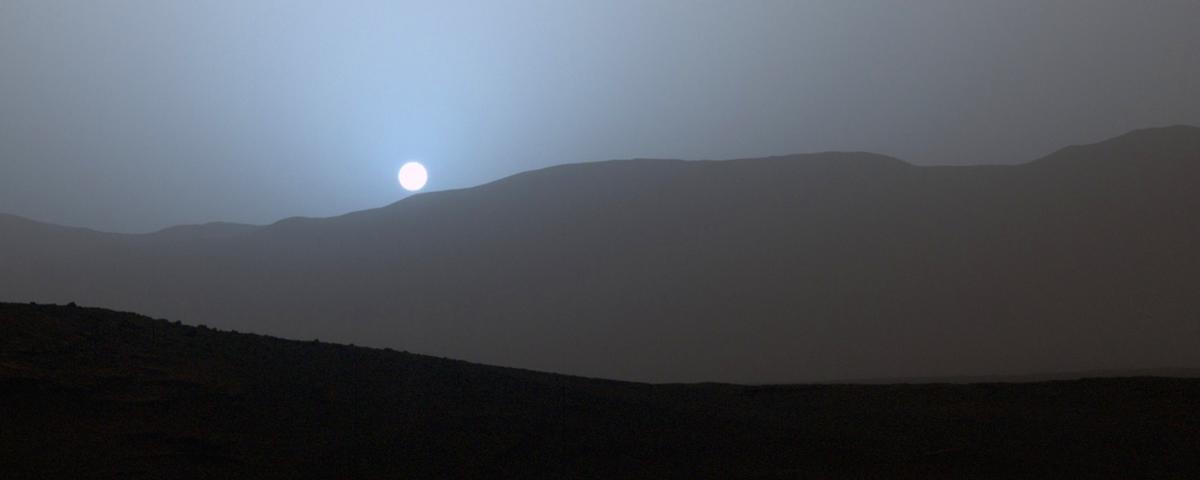
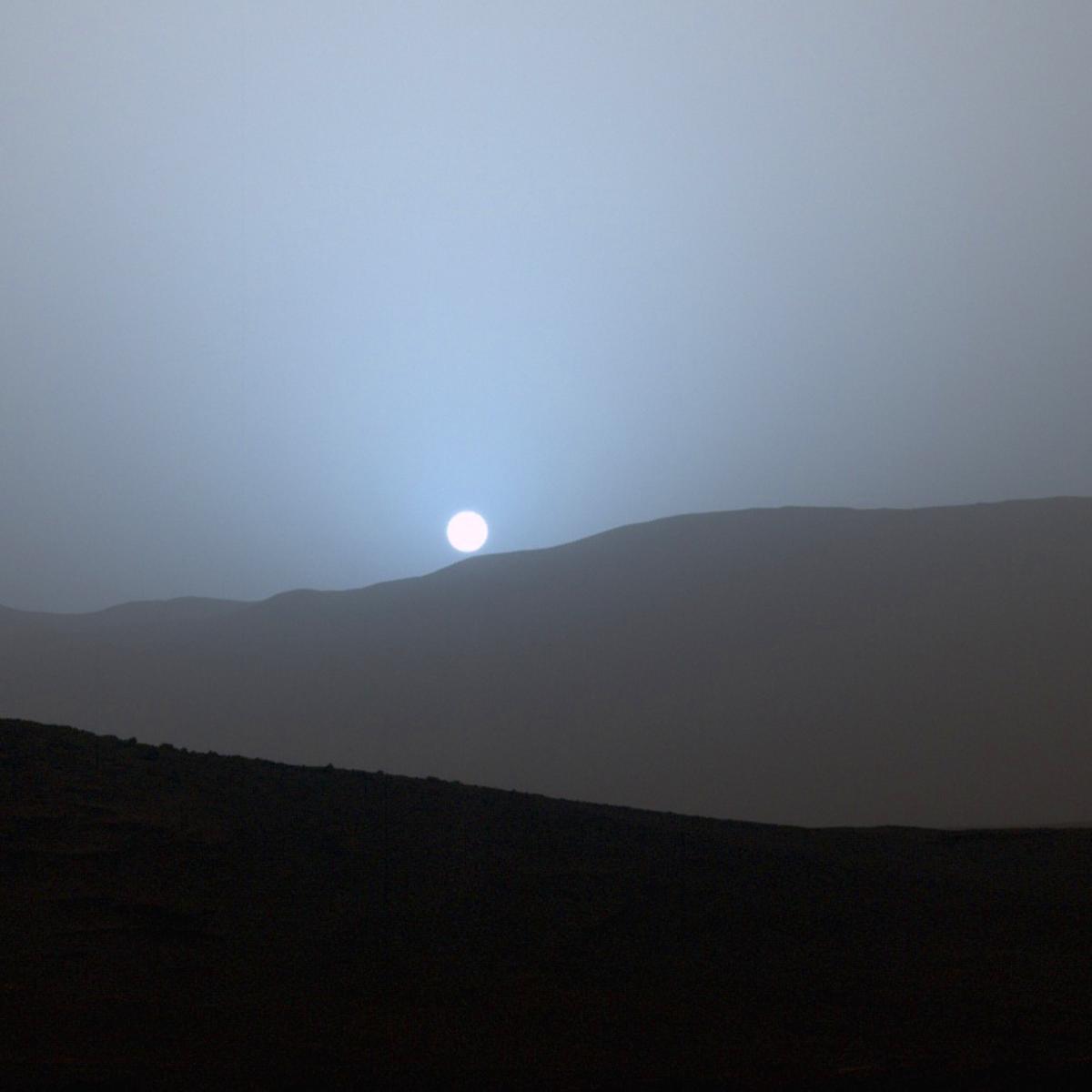
Our hero is trapped in a detention center on Mars. Outside, the horizon spreads out in an endless plateau, interrupted only by an occasional rocky hill or the outline of Nuevo Cuscatlán. Near sunset, when the sky turns a fiery orange, the landscape is almost Earth-like, mimicking the desert in Blythe, that migrant-filled town on the California-Arizona border. The United States’ latest border town. The town where our hero last saw his parents.
Earlier, he met a friend from work —another undocumented bricklayer— at a seedy bar. Things were looking up, our hero told him. His parents had gotten word that they’d be allowed into Arizona in a few days, which meant that a reunion might be possible. They still had to figure out whether he’d return to Earth, or if it’d be best for them to join him on the colony, but either way, they’d be reunited soon.
Our hero was giddy. He drank pilsners imported from Earth. He never much liked the beers when he’d lived in El Salvador as a teenager, but now they reminded him of the stability of those years. He joked, for the first time in months, and let the buzz rise to his head.
And then, in the sort of split-second encounter that changes a life, an immigration officer overheard our hero singing to himself in English on his way home. The officer scanned his false passport, and when the machine let out an ugly beep, he clamped handcuffs down hard on our hero’s wrists. Our hero pleaded, saying he was Salvadoran. He’d lived half his life in the country. He used vos instead of usted and knew how sweet mamones are freshly plucked off the branch. His Americanness was more about circumstance than desire.
None of that mattered to the immigration officer.
In the cell, the only light comes from under the doors, one on each wall. The cinder blocks sport a streaky paint job. It smells of hydrogen peroxide and blood. Even in the shadows, our hero can tell all the other Americans are white. Without saying anything to his cellmates, he lays his skull against the cold concrete. His skin, once sun-kissed and salted with ocean spray, is stark against the eggshell paint.
* * *
Before he was a Martian outlaw, our hero lived in Los Angeles, then La Libertad. He was born at USC Verdugo Hills, where his mother was a part-time professor of architecture. She was a bit of a hotshot, famous for designing the stilted neighborhoods all along the California coast, so much so that our hero’s father nicknamed her “the Architect.” The pet name stuck, even when our hero was old enough to realize that wasn’t his mother’s legal name.
Our hero’s passport had a glinting gold eagle, but on his eighth birthday, the Architect moved their family to El Salvador. She’d signed a contract with the Salvadoran government that’d lift hundreds of homes into the air and away from the encroaching oceans. It was an act of philanthropy meant to offset the millions she’d made elevating rich people’s beachside properties in California.
“I’ll be at the beach often to scout out the coastline,” the Architect told our hero. “You can come play in the sand.”
The sea changed over the years, from a translucent turquoise peppered with white taffy sea-foam to a cloudy brown. All the while, our hero watched from the sand, though he desperately wanted to swim in the waves. The sand irritated him, coating him like a layer of shedding skin. Grains of sand fell from his scalp into his eyes, making them water. The boy wanted more.
Our hero resisted for a while. The oceans were acidifying due to an unmitigated release of carbon into the atmosphere. Coastal cities had begun putting out advisories against swimming in the ocean after children began flooding into hospitals with severe skin irritation. The Pacific was becoming more and more destructive, even if the United States and allied governments refused to admit it. (Neither the Republican nor Democratic presidential platforms mentioned anthropogenic climate change that year.)
Eventually, though, the vast expanse was irresistible. Not even the Architect’s warnings could stop him.
He sprinted into the ocean, his soles sinking into the soft sand below the waves. Water sprinkled up to hug his thighs, and soon he was waist-deep. He dove in headfirst. The ocean was warm. He stared at the sky until he saw sunspots, then dipped his entire body back into the sea. The water felt good on his thick curls. There was nothing better than this feeling of lightness, as if gravity had stopped working. Our hero told himself he’d forever love the ocean.
When his eyes began to water, he assumed it was the salt. His body was unfamiliar with the sea, so it’d naturally take a bit of time to adjust. He shut his eyes to alleviate the pain. His skin stung too, building to a full-on burn. It became unbearable, so he cried out and flailed his arms.
Doctors treated his irritated skin for over a week. Small boils formed on his skin, and some of them had gotten infected in the time it took to get to the hospital in San Salvador. The boils popped, oozing creamy yellow pus. His arms and legs were splotchy and red, and they burned as a nurse applied ointment and bandages. He cried and cried, his tears leaving streaks on his cheeks that smelled of brine.
After he recovered, our hero refused to go to the beach, not even to sit in the glowing sand. When the ocean accelerated its encroachment on coastlines all over the world, he was inundated with images of waves crashing down on cement and asphalt. More cities on stilts were created, and his family continued to cash in.
These were also the years when the Lower North American Federation (LNAF) coalesced. After Mexican scientists observed waves eating the edges of the Yucatán Peninsula, they lobbied public officials throughout the isthmus until the governments of Mexico, Belize, El Salvador, Guatemala, Costa Rica, Nicaragua, Honduras, and Panama agreed to search for joint solutions to the existential threat at their shores. When the efforts to colonize Mars began, LNAF’s Projecto Ares was the frontrunner.
As our hero got older, the memory of his swim became fainter. He regained an appreciation for the ocean: the way it mimicked the color of the sky, its incomprehensible size and seeming endlessness, how it ignored humans’ attempts to separate themselves from it. It wouldn’t be until he’d made it to Mars that he could admit how much it had taken.



* * *
Our hero has no idea how long he’s been sitting in the freezing Martian cell. The guards slide measly beige scoops of rice through a slot in the door. They remove detainees for interrogation, but most don’t return. The LNAF claims deportations back to Earth are humane, even though they condemn people to an increasingly uninhabitable planet. There are dozens of stories of outlaws who meet cruel endings at the hands of immigration officers, leaving the colony in body bags.
Our hero squints his eyes, trying to make out the features of the men tied up next to him, when a thud rings out through the room.
“What the hell are you doing?” a redheaded American yells. A man named Bradley is banging his head against the concrete walls, and though others chime in urging him to stop, he doesn’t. Our hero understands. Trapped in the dark, with only their thoughts, guilt, and regrets, this is where they’re all headed eventually.
Suddenly the blinding ceiling lights burst on. Blood drips down the side of Bradley’s face. Pink flesh pokes out. Dime-size stains speckle the wall. Our hero wonders if his own flesh would look as rosy peeking out from under his tanned skin.
A door swings open, and a pair of guards hurl the sort of expletives favored by teenagers who called themselves Chicano on Earth. One grabs Bradley by the front of his bloodstained shirt, and though he slackens his body in resistance, the guards drag him out of the cell and slam the door shut behind them.
In desperation, our hero stands, his arms handcuffed behind his back. He throws his weight against the door. It’s a fruitless, doomed action, only slightly less mad than Bradley’s self-mutilation, but he does it anyway. The metal is cold against his shoulders, somehow colder than the room that chills the detainees from their skin inward. The handle clatters, but the door doesn’t budge.
When Bradley is thrown back into the cell, the detainees murmur at the sight of him. Hastily wrapped bandages hug his face, but blood still soaks through. He slumps to the floor, pupils unfocused.
“Who’s stirring shit up in here?” the guard shouts. “We have a way of dealing with shit-stirrers, you know.”
He steps toward our hero.
“Was it you?” the guard asks. His tobacco-tinged breath reeks, and his green jumpsuit is spotted with brown stains. Our hero steps back, until his crisscrossed wrists press up against a wall. The guard is shorter, thinner, and dirtier than him, but holds all the power. He pushes our hero, who stumbles.
It’s an opening — a small hint of light in the unwavering darkness. One by one, the detainees get on their feet. Hands tied, they throw themselves against the guard. Outnumbered, he falls to the floor, desperately reaching for his radio. Our hero kicks it out of his hand. The other men stomp the guard’s chest and stomach until he’s unconscious.
Powered by adrenaline and the vague hope that they’ll reconstruct the way out of the building, the nine men jog down the hallway, their shoes squeaking on the white antiseptic floors. Our hero struggles to keep his balance. Cold metallic handcuffs pinch his wrists. Escape is unlikely, but he must try.
* * *
Before he boarded a cargo rocket to Mars, and before he was our hero, he was like many seventeen-year-olds. He watched dubbed anime and played first-person shooters with his friend down the street. Typical almost-adult stuff filled his days, until El Desastre shattered the stability he’d come to rely on.
Our hero’s family moved back to El Salvador so the Architect could make minor adjustments to her original designs. In the initial plans, she’d spent hours considering the best materials for the foundation, knowing they’d be built directly into bedrock that’d soon be covered by quickly acidifying water. Given the scarcity of materials in the Salvadoran coastal towns —compared to a North American city like New York— she’d suggested materials that’d resist corrosion but would be cheaper to buy. The redesigns were simply meant to reinforce the elevated cities.
But the Architect didn’t account for how quickly fossil fuel deregulation took hold. The Paris Agreement fell apart completely. The U.S. government funded an international campaign that championed fracking and tar sand pipelines. Global superpowers turned the oceans into toxic stew, while denying that they were affecting it at all.
The Architect’s cities came tumbling down. For weeks, headlines haunted her and her family: “El Desastre de La Libertad Kills 102 Salvadorans,” “Residents of Stilted Cities Displaced Inland,” “American Engineer Recommendations Threatened Structural Integrity of Stilted Cities.” When she saw a photograph of a child’s shoulder poking out from underneath a pile of rubble, she threw up in the patio garden. Our hero watched as she wiped the vomit off the corner of her mouth, only then understanding the severity of his mother’s miscalculation.
“The articles are only getting worse and worse,” our hero’s father said, reading an op-ed claiming that the Architect’s ineptitude was a sign of American arrogance and disrespect for the Salvadoran people.
“I can’t let them treat me this way,” the Architect said. “I’ve already paid out the settlements. Dios mío. They can’t keep blaming me like this.”
Our hero knew they’d leave El Salvador soon.
As his father packed their bags, he went to say one last goodbye to the coast with his mother. The toes of their sneakers dug into walnut-colored dirt. The sand our hero played in as a nine-year-old had been eaten up by the surf, along with the stilted cities’ beams and bolts.
“On the day you went to the hospital with all those shiny red boils,” the Architect said, “I thought I reached a low point as a mother. I figured nothing could be worse than that.”
“The ocean’s still beautiful,” our hero said. His mother nodded before responding.
“But it doesn’t respect anyone or anything. No buildings, no borders. Nothing.”
If they’d been able to stay in El Salvador —if disaster hadn’t made them exiles— the Architect and her family might have made it up to Mars together. The LNAF and other countries hit hard by environmental catastrophe combatted anthropogenic climate change, but eventually realized that the future was interstellar. It was no coincidence that those governments were the first to break ground on the Red Planet. The scientists and politicians who had the earliest and clearest path to salvation on Mars were from quickly slimming countries like El Salvador, Panama, the Philippines, Japan, and Antigua.
But our hero and his family fled to the United States under the dying embers of sunset, which reaffirmed that they were in fact Americans. Soon they’d be like thousands of other American families: marooned and desperate, trying to survive on an increasingly unlivable planet.

* * *
The doors all along the hallway are locked; smooth, impenetrable walls of metal. The holding cell with the unconscious guard waits behind them. The Americans have no way out. After a few minutes of confused mutters and some arguing, Bradley speaks up. Rusty blood taints his bandaged forehead.
“The guard has a key card,” he says.
“You’re fucking insane,” the redheaded detainee says. “You go and get it.”
“I’ve been through enough today, don’t you think?” Bradley says.
“The wetback should go. If the guard wakes up, he’ll go easier on him,” the redhead says.
Bradley locks eyes with our hero, who stares into his crystalline blue irises to avoid the gazes of the other men. The white man’s lips are pressed together, though they twitch in the direction of the cell. It’s a signal of sorts, a wordless cosign of the redhead’s proposal.
Without a word to the group, our hero walks back toward the cell. He doesn’t know what he’ll do if the guard is awake waiting for him, but his options are slim. For much of his time on Mars, he’s shrunk himself, trying to avoid being caught. Now it’s time to really be a hero, to do what he can to live another day.
Our hero steps back into the cell, his skin prickling from both fear and the drop in temperature. The key card hangs from a spring snap on the guard’s belt. The radio and a baton lay on the floor a couple yards from him. His eyes are closed.
First the handcuffs. Quietly, our hero gets on his knees next to the guard’s neck. He can hear the shallow pulsing of his chest. He lowers his butt toward the floor, leans back, and moves his hands up and down the guard’s waist, aiming for the key card, though he can’t see where it is. After a few seconds of this, he hears a click and feels the metal loosen, freeing his wrists.
The guard stirs. Our hero panics. Unsure of what else to do, he balls his hands into fists and punches. The first swing skims the bottom of the guard’s chin, but the second lands square on his cheek. The motion feels unnatural —vulgar, even— but our hero continues.
Dazed, the guard tries scooting away. Our hero lunges, grasping at the clip on the guard’s belt. It snaps open, and his fingers fumble to free the key card. The guard tries pulling him down by the bicep. With an awkward slap, our hero pushes the guard’s face away, grabs the radio, and runs out of the cell.
To the white Americans in the hall, our hero looks like a guard, like the men they’ve learned to avoid on Mars. His jutting nose and brown skin signal danger, but in this moment they must set that aside. Our hero is their salvation.
He presses the key card against one of the many doors and ushers the other Americans through it. The guard’s footsteps are loud, but when the door closes, only muffled shouts and pounding come through.
The Americans form a routine: open a door, run through the hallway, open another. Repeat. Our hero leads the way. They aren’t exactly working their way out of the detention center, but if they outrun the guard and avoid his coworkers, there’s hope.
Our hero pulls open a door with no key card sensor, stupidly hopeful it’ll lead to the outside world. It’s a storage closet, nothing more.
“It’s a dea—” our hero is saying when he’s knocked down.
The key card slides across the hospital-like floor. The redhead picks it up and opens another door, and the others run through, abandoning our hero. He bangs and bangs, but the door won’t reopen.
Guards are looking for him. His cellmates have double-crossed him. Our hero is stuck in between, with no way out of this hallway. All he’s left with is the enemy’s radio. In a split-second decision, he shuts himself in the storage closet. He presses his back against the concrete and sinks to the floor. Applying pressure with his whole body, he begs the wall to open and swallow him whole.
* * *
For three years, our hero, his father, and the Architect enjoyed a brief respite in Los Angeles. It wasn’t perfect. The Architect no longer took jobs designing elevated neighborhoods, and the settlements pulled the family down from the echelons of the hyper-wealthy. The oceans were bloated with carbon, and coastal damming systems regularly broke down, washing thousands of homes out to sea. The edges of the United States were dissolving, but the government wasn’t too concerned with extraterrestrial solutions. There was a lot of dry land, and most people were distracted by the demagogues in elected office. Our hero thought his family would be okay in the long run.
But by the end of our hero’s twentieth year, the waves had eaten the office building where the Architect first blueprinted the stilted homes in La Libertad. The bricks and shattered windowpanes tumbled down into an ocean that wasn’t waning, so our hero and his family loaded their hatchback with a fraction of their possessions and drove east. They figured they could rebuild a home in Arizona, or even farther into the country’s heart.
They drove for three hours, past increasingly empty landscapes adorned only with stray desert shrubs. As the sun rose directly above their heads, the highway became narrower. Near one of the rare off-ramps, the hatchback shuddered to a stop.
“We’ve been here before,” the Architect said with a small sigh. “Blythe. We stopped for gas and ate at the McDonald’s.” A sheriff flashed his lights and instructed them to exit the highway. Our hero saw then how the town had transformed.
Before, Blythe was nothing more than a small, dusty town in the middle of the desert. It was a stop for road-trippers on their way to Phoenix or the Grand Canyon, a convenient place to buy a burger or refill a tank. Now it was a bustling refugee camp. Cars were packed into dirt lots off a crumbling road. Men sat on the hoods of their sedans and in truck beds. Children chased each other in circles, snaking around the RVs and tents that popped up like succulents in the ashy dirt.
The sheriff explained that the only people allowed across the Colorado River were those who’d petitioned for entry in advance. In response to classified reports that California would be submerged within the year, the governors of Arizona, Nevada, and Utah shut their borders, sparking a lawsuit over a constitutional violation of the Fourteenth Amendment.
“You’re welcome to apply for special entry,” the sheriff said. “Or you can wait to see if the court case works itself out. Best bet would be to do both.”
Blythe grew around them. Temperatures skyrocketed during the day and sank below freezing at night. Shantytowns of cinder blocks and corrugated metal formed, and the pile of applications grew taller and taller as thousands of Californians flocked to the border to escape their drowned hometowns. Our hero and his family slept in the hatchback, on uncomfortable car seats, waiting for good news. The coastline crept toward them, moving meters every single day.
In the two months our hero waited, the global crisis escalated. Dry land became a luxury, and most nations closed their major airports. Countries with colonies on Mars funneled their resources into permanently relocating their citizens, sending rocket ship after rocket ship of families spaceward. The Americans hadn’t been able to wheedle themselves onto the planet. As the main culprits behind the crisis, and centuries of other, smaller disasters, all Americans were banned.
So our hero waited, knowing that Arizona was the only real option for his family. He befriended a teenager about his age, and though there was little to do in Blythe, they kept each other entertained by drawing pictures in the dirt, until one day the friend said he was leaving.
“To Mexico,” he explained. “My parents and I are U.S. residents, but we still have our Mexican passports. They don’t think we’ll ever get into Arizona, so we’re driving to Mexicali tomorrow. And from there, we’ll make it up to Mars.”
Soon after, the Architect would whisper to our hero, holding back the tremor that threatened to overtake her voice. “The only option is up.”
Money was tight, so our hero would have to go alone. His parents would wait in Blythe and figure out a way of reuniting once they got to Arizona.
“We’ll be together again soon,” the Architect promised. “Either here or up there.”
* * *
The plastic edge of a janitor’s mop bucket digs into our hero’s shoulder. Even though he’s done nothing for days, in the grimy storage closet a deep exhaustion sets in, similar to the ache from a full day of laying bricks. Never has he had to work so hard for so little. His shirt is soaked in sweat, the cheap cotton gripping the hairs on his chest. The closet is cluttered with cleaning agents and spray bottles, but there’s nowhere to hide.
He closes his eyes for a second, but when muffled footsteps and faint voices come from somewhere outside the storage closet, he tries to focus. A pressure builds in our hero’s temples. Boots thunder in the hallway. Our hero is acutely aware of how tense his body is. Though he’d been fairly skinny all his life, his biceps widened because of all the construction work. Layers of sinewy muscle tighten.
Then the radio shrieks, betraying our hero. The door swings open.
Our hero grabs the guard’s olive coveralls and tries swinging him against the wall. The guard grips his tattered shirt, stretching the cheap fabric in his hands. Soon the two men are locked with their heads against each other. Their cheeks, flushed and rosy, crash as they struggle.
Our hero has never found a thrill in physical violence, not even horseplay, so when he grabs the mop bucket it isn’t out of fury or a desire to maim. He simply wants to be free, and it’s pure desperation that bashes the wheels against the guard’s temple. He falls unconscious.
When the guard doesn’t move, our hero lowers his ear to the guard’s chest. It’s shallow, but he’s breathing. Our hero could have killed the guard. This is the kind of man he’s become. He dry-heaves at the thought.
If he’s going to get out, our hero must use the advantage his cellmates don’t have. He unzips the guard’s jumpsuit, revealing the bruises that bloom all over his body. He dry-heaves again, but eventually slips into the uniform. The green fabric looks wrong against his brown flesh, but he knows this is the only way out. Disguised, our hero might somehow make it out of the labyrinth.
The false passport felt flimsy in our hero’s fingers. He kept his lips pursed tight and passed it to the customs officer at the Guatemala–El Salvador border.
“What’s your business in the country?” the official asked.
“Space travel.” Our hero hoped the official wouldn’t ask more questions.
“On your way to Mars?” The man sighed. “I’ve seen so many young men come back home, only to leave again.”
The Martian colony was the crowning achievement of Projecto Ares. The LNAF terraformed more and more of the planet every day, aided by the hundreds of people arriving monthly. The Nicaraguans worked with the Vietnamese to build aerogel bubbles that’d protect the cities from the endless sandstorms. The Guineans helped the Salvadorans install booths for interplanetary communication. The Mexicans organized law enforcement efforts.
Coalitions made the planet habitable, and then alluring. Everyone wanted to be on Mars, but since resources were limited —mining asteroids and importing materials from Earth wasn’t easy— the LNAF and its allies had to set some rules. One of them had to do with visa requirements. Only those who could produce a birth certificate proving they were born in an allied country were eligible for passage to Mars.
Our hero bummed around El Salvador on mostly empty buses, searching for a solution to his dilemma. He stayed wherever he could find the cheapest lodging, his funds thinning. In one small town —adorned with nothing more than a church and an abandoned plaza— he borrowed a phone to call his parents. Nothing much had changed for them. They were still waiting to hear if they’d be allowed passage into Arizona.
Hope came soon after. A man in a fedora approached our hero as he shoveled down the first full meal he’d eaten in days.
“They tell me you’re on your way to Mars,” he said. The man was in his forties, and he had a patchy beard and a couple of missing teeth. The others were yellowed and stained by the cigarettes in his breast pocket. “I can help you with that.”
The smuggler told him it’d be $9,000, but with no other options, our hero asked his parents if they could wire him the cash, knowing they needed the money as much as he did.
“Whatever it takes,” the Architect said. “Just try to call us when you get there. Please.”
And so our hero boarded a cargo rocket carrying construction supplies and exported beer. For eight months, he played out all the possible scenarios. He’d live alone on Mars for only a few months, until his parents could join him. Or his mother would find the funds to build a new home for them —indestructible, far above the ocean— and he’d zip back down to Earth. He didn’t know then that he’d be trapped in the detention center, unsure if he’d ever escape, if he’d ever see his parents again.
In the minutes before touchdown, our hero looked through the tiny porthole. He was so minuscule in the infinitely expanding universe, and yet there he was: a young man who’d made it off Earth and ventured far enough to see the swirling sandstorms on Mars’ face. Infinite possible outcomes, and he’d arrived at the brink of a rebirth, another shot at a dignified life.

* * *
Our hero sneaks past real guards who assume he’s a new hire. Eventually he finds a door with a window to the outside world. The dusky red landscape has never looked so beautiful. A single vertical barrier, only a few inches thick, stands between him and freedom.
The door is locked. Our hero wants to scream but doesn’t.
The door slides open. An immigration officer walks in, dragging a man in by the shoulder. Our hero recognizes the man in cuffs. Their lives overlapped briefly on a construction site. He can’t remember his name, but knows the man is in his thirties, Nicaraguan, and from Oakland. Our hero braces himself, waiting for the man to scream and ruin his escape.
But the Nicaraguan’s lips purse shut, and his chest tightens, as if he’s holding his breath with all his strength. He doesn’t resist as he’s led down the hallway. Our hero slips out of the front door before it locks, and his boots finally make direct contact with Martian dust.
The opportunity to be courageous was there, then it was gone. Our hero could have tackled the guard and tried bringing the Nicaraguan with him to freedom, but he hadn’t. He let the Nicaraguan become who he himself had been: a man freezing in the cell, desperate for escape, unsure if he’d ever see the Martian sunset again.
It was cowardly, but not unexpected, because truthfully, our hero is not a hero at all. He’s an outlaw whose only desire is to survive one day longer out in the open, so he acts selfishly. A boy longing for his parents reacts like a child: on impulse, without tact. He’s just a man susceptible to the whims of his governments, the one he was born into and the one he adopted. He wears many names —criminal, rule-breaker, laborer, foreigner, ingrate, man, boy, son, refugee— because, really, who can be a hero in the unrelenting tide of injustice?
Red dust speckles his boots as he walks away from the facility. He mounts a motorbike, and the key card in his pocket sparks the engine. In the distance, the skyline of the LNAF colony shimmers. When he arrives, he’ll call his parents and make plans. There’ll be no time to hesitate, since immigration authorities will be searching for him. Deimos is a speck in the sky.
Phobos is a glowing orb. The desert spans endless in front of him. High above, the aerogel capsule gleams like the surface of a soapy bubble. Among the buildings of Nuevo Cuscatlán, he’s built a life. With a rev of the engine, he drives toward it.
Ruben Reyes Jr. is the son of two Salvadoran immigrants and the author of the collection of short stories There Is a Rio Grande in Heaven and the novel Archive of Unknown Universes (Mariner Books/HarperCollins, 2024 and 2025, respectively). A graduate of the Iowa Writers’ Workshop and Harvard College, his writing has appeared in The New York Times, The Washington Post, Lightspeed Magazine, and elsewhere. In 2026, he was named a Forbes 30 under 30. Originally from Southern California, he is based in Queens.